Corydoras Catfish
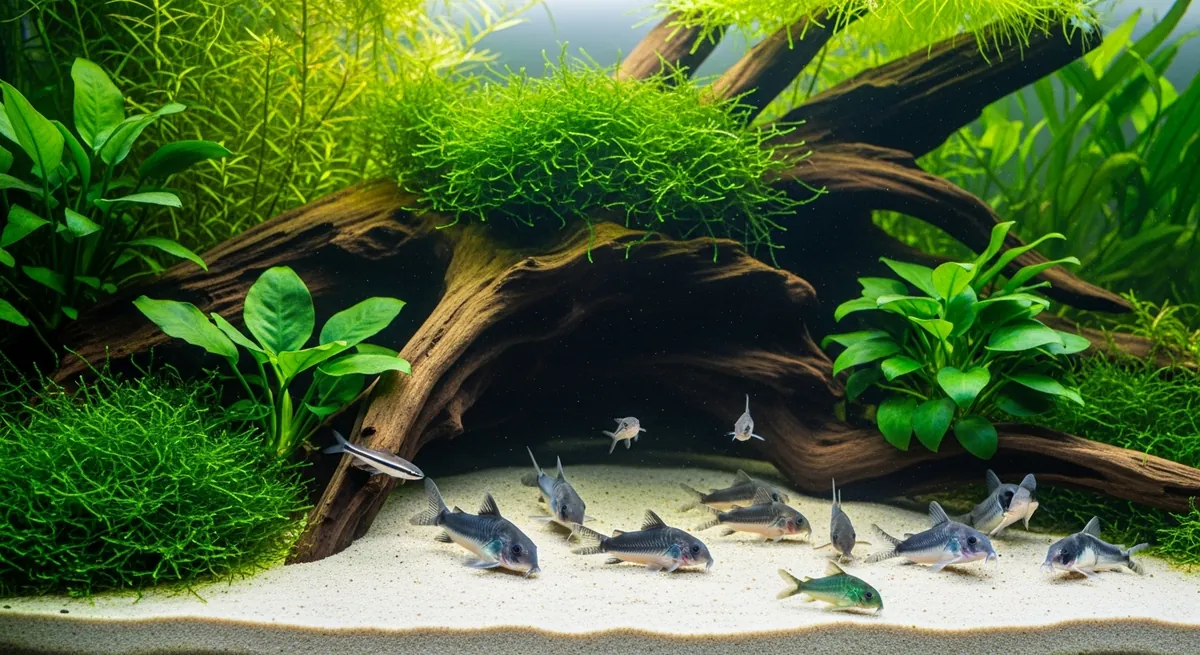
Corydoras are peaceful, social bottom-dwelling catfish kept in groups of 6 or more, on soft sand, in a cycled tank of 20 gallons or more. They are excellent calm tankmates and clean up leftover food.
Corydoras catfish at a glance
- Scientific name
- Corydoras sp.
- Adult size
- ~2.5″
- Temperature
- 72–80°F
- pH
- 6–7.5
- Minimum tank
- 20 gal
- Temperament
- peaceful
- Social
- schooling — keep 6+
- Reference
- Wikipedia
Corydoras species compared: size, temperature, tank size
| Species | Scientific name | Adult length, total | Temperature | pH | Minimum tank | Keep in |
|---|---|---|---|---|---|---|
| Pygmy corydoras | Corydoras pygmaeus | 1″ (2.5 cm) | 72–79 °F (22–26 °C) | 6.2–7.4 | 10 gal (38 L) | 6+ |
| Panda corydoras | Corydoras panda | 2″ (5.1 cm) | 68–77 °F (20–25 °C) | 6.0–7.4 | 20 gal (76 L) | 6+ |
| Julii corydoras | Corydoras julii | 2.2″ (5.6 cm) | 72–79 °F (22–26 °C) | 6.0–7.5 | 20 gal (76 L) | 6+ |
| Sterbai corydoras | Corydoras sterbai | 2.6″ (6.6 cm) | 75–82 °F (24–28 °C) | 6.0–7.6 | 20 gal (76 L) | 6+ |
| Peppered corydoras | Corydoras paleatus | 2.8″ (7.1 cm) | 64–78 °F (18–26 °C) | 6.0–7.5 | 20 gal (76 L) | 6+ |
| Bronze corydoras | Corydoras aeneus | 3″ (7.6 cm) | 72–80 °F (22–27 °C) | 6.0–7.8 | 20 gal (76 L) | 6+ |
Smallest to biggest: the pygmy cory is the smallest at about 1 inch total length; the bronze cory is the largest of the common species at about 3 inches. Temperature is the spec that decides your pick: the peppered cory takes the coolest water and the sterbai the warmest, which is why sterbai is the cory kept with discus. The albino cory is an albino strain of the bronze (C. aeneus), so the bronze row covers it. Most fish sold as julii are really C. trilineatus, and care is the same for both. Lengths here are total length, tail included, which is what you plan a tank around; how big do corydoras get lists the smaller FishBase maximum standard lengths, measured to the tail base. Every figure in this table is the value our stocking calculator uses.
Corydoras are small, armored, bottom-dwelling catfish from South America, and one of the most useful peaceful community fish. They potter along the substrate all day, sifting for food, and get along with almost everything.
Corydoras are shoaling catfish from South American rivers and streams; keep a group of six or more.4
Corydoras at a glance
Bronze cory (Osteogaster aenea, formerly Corydoras aeneus) as the representative common species; data and identification per ScotCat.4
| Attribute | Authority | Real tanks (AquaGauge) |
|---|---|---|
| Adult size | 6.5–7.5 cm4 | — |
| Temperature | 20–27 °C (67–81 °F)4 | median 78 °F (33 tanks) |
| pH | 6.5–7.24 | median 7.5 (60 tanks) |
| Minimum group | 6+4 | — |
| IUCN status | Least Concern2 | — |
"Real tanks" = medians from our corydoras water-parameter data (tanks reporting each reading). Authority figures are ScotCat's recommended ranges; the medians show what keepers actually run.
Groups and tank size
Corydoras are social shoalers — keep 6 or more. In a group they forage and play in the open; alone they hide. See the full breakdown by tank size in how many corydoras in a tank. A group of the common species wants a 20-gallon or larger footprint for floor space, though dwarf species like the pygmy corydoras suit a 10-gallon. For the full size table by species, see how big do corydoras get.

"If you are starting off with this species, buy at least half a dozen, as with most Corys, they are happier in their own company."
Substrate and water
Use soft sand. Corydoras feed by sifting substrate through their barbels, and sharp gravel grinds those barbels down and invites infection. They like soft to neutral, stable water around 72-80 F — see the full corydoras water parameters breakdown.2 A few species have their own quirks — the panda corydoras, for example, prefers the cooler end (72-77 °F), while sterbai corydoras handle up to 82 °F (great with discus) and the subtropical peppered corydoras tolerate cool, even unheated tanks. Good filtration and clean substrate matter because they live at the bottom where waste settles.
Popular corydoras species
There are over 160 corydoras species; these are the ones you’ll actually meet in the hobby. Care is broadly the same across them, so the differences come down to size, colour, and preferred temperature.
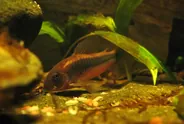 Bronze coryC. aeneus · the hardiest and most common; the default beginner cory.
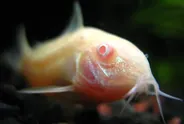 Albino coryAn albino strain of the bronze (C. aeneus); identical care.
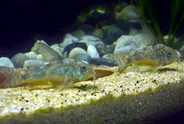 Peppered coryC. paleatus · subtropical and cold-hardy; fine in a cooler or unheated tank.
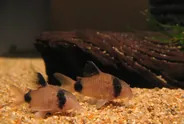 Panda coryC. panda · the black-and-white favourite; prefers the cooler end (72-77 °F).
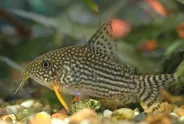 Sterbai coryC. sterbai · the warm-water cory (to 82 °F); pairs with discus.
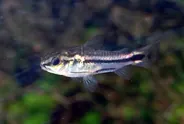 Pygmy coryC. pygmaeus · a nano cory (~3 cm) that shoals in mid-water; suits a 10-gallon.
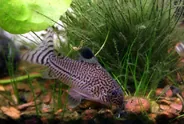 Julii coryC. julii · the spotted "leopard" cory; most sold as julii are really C. trilineatus.
Species photos via Wikimedia Commons: bronze — Jofre (public domain); albino — Leonardo Da Silva (CC BY 2.0); peppered — Alter welt (CC BY-SA 4.0); panda — Giniro (CC BY 3.0); sterbai — Tino Strauss (CC BY-SA 3.0); pygmy — Birger A (CC BY-SA 3.0); julii — Kai Schreiber (CC BY-SA 2.0).
Diet
They are bottom feeders, so make sure food reaches them: sinking pellets or wafers, plus frozen bloodworms and the leftovers other fish miss. They help clean up, but they are not a cleanup crew that lives on scraps alone; feed them directly. Despite common belief, corydoras do not eat algae.
Behaviour and the air-pump question
Corydoras are busy, social, and genuinely entertaining. In a group they forage out in the open, dash around, and pile up to rest, and many keepers find they quickly learn the feeding routine. They are also facultative air-breathers: every so often a cory shoots to the surface, gulps a mouthful of air, and darts back down. That is normal, not distress, because they can absorb oxygen through their gut as a backup. It also means a corydoras tank does not need an air pump, as long as the water is clean, well-filtered, and the surface stays reachable. The exception is the whole group gulping at the surface non-stop, which signals poor water or low oxygen, so test it.
Lifespan and breeding
Corydoras are long-lived for small fish. The common species often reach 10-15 years with good care, while nano species like the pygmy live around 3-4. See the full corydoras lifespan by species breakdown.
Breeding follows one genus pattern: a large, cooler water change triggers spawning, the female sticks her eggs to the glass and fine-leaved plants, and they hatch in about three to four days.3 Once their yolk sacs are absorbed, the fry take microworm and baby brine shrimp over a thin layer of sand.3
Temperament and tankmates
Corydoras are peaceful and ignore other fish, which makes them one of the best community tankmates.3 The classic aquarium author William T. Innes described them the same way long ago: “Corydoras is a quaint little fish and very well adapted to life in the aquarium. Principally a ground-feeder, it is regarded as something of an aquarium scavenger. Quite harmless.”1 See the full corydoras tank mates guide for the compatibility model, real-keeper companion data, and what to avoid. They are a classic choice with a betta — see the betta fish care guide.
Compatible tankmates for Corydoras catfish
Generated from our compatibility model — temperament, fin-nipping, temperature overlap and predation. Run your exact plan in the calculator below.
Good companions:Neon tetra, Ember tetra, Cardinal tetra, Harlequin rasbora, Guppy, Endler's livebearer, Platy, Molly, Zebra danio, Pygmy corydoras, Panda corydoras, Bronze corydoras, Sterbai corydoras, Peppered corydoras, Julii corydoras, Otocinclus, Kuhli loach, Dwarf gourami, Tiger barb, Serpae tetra, Angelfish, Cherry shrimp, Nerite snail, Mystery snail, Bristlenose pleco, Common pleco.
Avoid:Betta.
Plan a Corydoras tank
Start with the centerpiece and check stocking, filtration and compatible tankmates — live.
Planning a Corydoras catfish tank. We start with your corydoras catfish and filter the list to compatible tankmates — untick to see every species (incompatible ones get flagged).
Stocking — under 85% comfortable · 85–100% full · over 100% overstocked
Show the math
Gear for this setup
As an Amazon Associate AquaGauge earns from qualifying purchases. Some links below are affiliate links, at no extra cost to you. Current price and availability are shown on Amazon. Disclosure.
 Aqua Natural Sugar White Sand (10 lb)Soft, rounded sand is the one non-negotiable for corydoras: they sift substrate through their barbels, and sharp gravel wears those barbels down.Check price on Amazon →
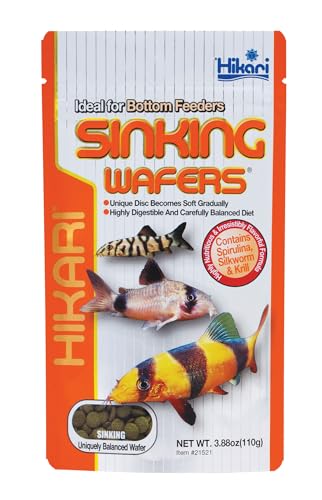 Hikari Sinking Wafers (3.88 oz)Corydoras do not eat algae and cannot live on leftovers. A slow-dissolving sinking wafer feeds the whole group on the bottom.Check price on Amazon →
 AQUANEAT Bio Sponge Filter (up to 20 gal)Gentle flow that will not blow a foraging group around, and no intake slot narrow enough to trap barbels.Check price on Amazon →
FAQ
- How many corydoras should I keep together?
- At least 6. Corydoras are social shoaling catfish that are visibly more active and confident in a group. Singles or pairs hide and do poorly.
- What tank size do corydoras need?
- 20 gallons or more for a group of the common species, which gives them floor space to forage. Dwarf species like pygmy corydoras can work in 10 gallons.
- Do corydoras need sand?
- Soft sand is best. They forage by sifting substrate through their barbels, and sharp gravel wears those barbels down and causes infections.
- Are corydoras good tankmates?
- Excellent. They are peaceful, stay on the bottom, and ignore other fish, which makes them a top choice with bettas, tetras, and most community fish.
- Are corydoras good for beginners?
- Yes. They are among the hardiest and most peaceful community fish, and bronze and peppered corys tolerate an especially wide range of conditions. Give them a group of six, soft sand, and stable water and they are very forgiving.
- Can corydoras live without an air pump?
- Yes. Corydoras are facultative air-breathers that gulp air from the surface, so they do not need an air pump as long as the water is clean, well-filtered, and the surface is reachable. Constant frantic surface-gulping by the whole group is different and points to poor water quality.
Sources
- The Complete Aquarium Book.
- Corydoras aeneus (Bronze Corydoras), FishBase. View source ↗
- Corydoras aeneus, Seriously Fish. View source ↗
- ScotCat catfish factsheets, ScotCat (electronic publication) (2025). View source ↗

Freshwater aquarist of 8+ years.